7-Eleven exit: India doesn’t need convenience. It needs Indian convenience
Guest Column: Ganapathy Viswanathan, Independent Communication Consultant & Author, on why the 7-Eleven’s exit offers a larger lesson for global retailers entering India
 by
by
Published: Oct 9, 2026 8:38 AM | 5 min read
 Follow Us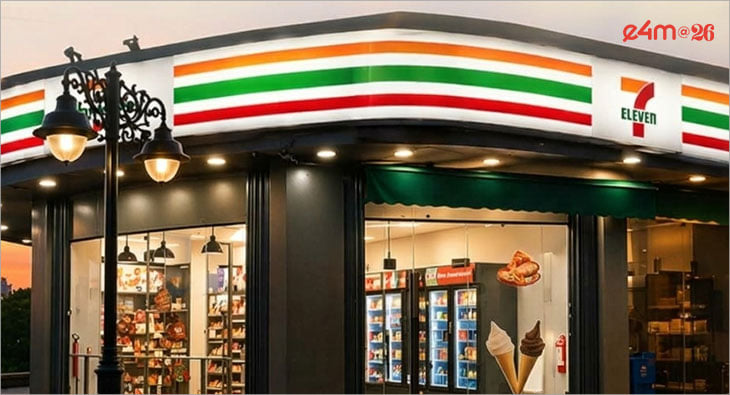

- 7-Eleven's exit from India highlights the challenges faced by global retail formats in a market where traditional convenience stores, or kiranas, have long been established and are deeply integrated into local consumption habits.
- The definition of convenience has evolved in India, shifting from proximity to the store to the ability to shop from home through modern trade, e-commerce, and quick commerce, which offer various advantages such as speed, variety, and promotions.
- India's diverse consumer market presents challenges for global retailers, as regional differences in food habits, lifestyles, and purchasing power require tailored strategies rather than a one-size-fits-all approach.
- The future of retail in India is likely to be omnichannel, blending physical and digital experiences, with a focus on understanding local consumer expectations and preferences rather than solely replicating international retail models.
The exit of 7-Eleven from India is more than the closure of a global retail format. It is a reminder that India had already invented its own version of the convenience store long before international chains arrived. The neighbourhood kirana was close, personal, flexible and deeply connected to local consumption. It sold in small quantities, knew what the neighbourhood wanted and, often, extended credit. Convenience in India was never just about the store. It was about familiarity.
Then the definition of convenience changed dramatically.
FROM THE KIRANA TO THE SMARTPHONE
Modern trade brought organised supermarkets. E-commerce took shopping to the home. And quick commerce changed the game again by promising delivery in minutes. Today, consumers can order milk, snacks, groceries and everyday essentials without leaving their homes.
The meaning of convenience has therefore moved from “the shop is near me” to “I don't need to go to the shop.”
That puts the traditional convenience-store model under pressure. The kirana has proximity and relationships. Modern trade has scale and promotions. E-commerce has assortment. Quick commerce has speed. What, then, does a conventional convenience store bring that consumers cannot get elsewhere?
INDIA IS NOT ONE MARKET
This is where global retail formats face their biggest challenge. India may be one country, but it is not one homogeneous consumer market. Food habits, cultures, festivals, incomes, lifestyles and consumption patterns change dramatically from region to region.
What works in Mumbai may not work in Lucknow. What appeals to an affluent Bengaluru consumer may have little relevance in a smaller city. Even within a city, consumer behaviour can change dramatically from one neighbourhood to another.
A global retailer can standardise its brand, technology and operating systems. It cannot standardise Indian consumers.
THE REAL ESTATE TRAP
There is another challenge that is becoming increasingly important: real estate.
Convenience depends on location. The store has to be visible, accessible and close to consumers. But India's prime urban real estate has become increasingly expensive. The better the location, the greater the rental burden.
That creates a difficult equation. A retailer needs high footfall to justify the store, but high footfall locations come with high costs. Add manpower, inventory, logistics, electricity and technology, and the economics become considerably more demanding.
The neighbourhood kirana often has an advantage here. Many stores have been in the same location for years, sometimes generations. They do not have to recreate the entire retail experience from scratch.
INDIAN CONSUMERS WANT VALUE WITH CONVENIENCE
There is another reality global retailers cannot ignore: India remains a highly price-conscious market.
The country's enormous population does not represent one uniform level of purchasing power. There are affluent consumers willing to pay for premium experiences, but there is also a vast middle and value-conscious market that actively compares prices.
Consumers may want convenience, but they do not necessarily want to pay a large premium for it.
Modern trade and e-commerce have reinforced this behaviour with discounts, promotions and loyalty programmes. Quick commerce has added another dimension: speed.
The Indian consumer increasingly expects value, variety and convenience together.
QUICK COMMERCE HAS RAISED THE BAR
Quick commerce is perhaps the biggest challenge to the traditional convenience-store proposition. Once consumers become accustomed to getting something delivered in 10 or 15 minutes, physically walking to a store begins to lose some of its attraction.
The question for physical convenience stores is therefore no longer simply, “How close are we?”
It is: “Why should the consumer come to us?”
The answer has to go beyond selling everyday products. It could be fresh food, coffee, premium products, a curated assortment, an experience or a seamless combination of physical and digital retail.
THE WALMART AND CARREFOUR LESSON
The experience of other global retailers offers an important clue. Walmart has built its India presence through wholesale and its investment in Flipkart rather than simply replicating its American retail model. Carrefour, after exiting India earlier, has returned through a franchise partnership.
The message is clear: India may require a different route to market, not just a different product mix.
Partnerships, franchising, digital platforms and local operating expertise can help international retailers navigate a market where scale alone is not enough.
THINK GLOBAL. OPERATE LOCAL.
The winning strategy may therefore be to think nationally but operate locally.
The brand can remain global, but the assortment may need to change by region. Pricing may need to reflect local purchasing power. Store formats may need to vary. Product sizes, food choices, promotions and even operating hours may have to respond to local behaviour.
India's diversity is not a marketing footnote. It is a retail reality.
THE FUTURE IS OMNICHANNEL, NOT OFFLINE OR ONLINE
None of this means physical retail is dead. Consumers will continue to shop in stores, discover products and enjoy experiences. But the role of the store is changing.
A store can be a destination, an experience centre, a fulfilment hub, a pickup point or simply one part of a larger omnichannel ecosystem.
The consumer does not care whether the retailer thinks of itself as online or offline. The consumer simply wants the easiest way to buy.
THE 7-ELEVEN LESSON
The 7-Eleven story should therefore not be dismissed as an international brand failing in India. It is a much more interesting lesson.
India already had the kirana. Then came modern trade. Then e-commerce. Then quick commerce. Each created a new definition of convenience.
At the same time, real estate became more expensive, consumers became more value-conscious and purchasing behaviour became increasingly fragmented.
For global retailers, India's enormous population remains an extraordinary opportunity. But it is not a blank canvas.
India does not need another imported retail formula. It needs retailers willing to understand how differently Indians shop.
The ultimate lesson is simple: In India, convenience is not a store format. It is a consumer expectation—and the consumer is constantly redefining it.
Read more news about Marketing News, Advertising News, PR and Corporate Communication News, Digital News, People Movement News
For more updates, be socially connected with us onInstagram, LinkedIn, Twitter, Facebook, YouTube & Google News
